Identity & Remembering
How to Find Yourself Again When You Feel Like You’ve Lost Who You Are
You may not need to reinvent yourself. You may need to hear yourself again.
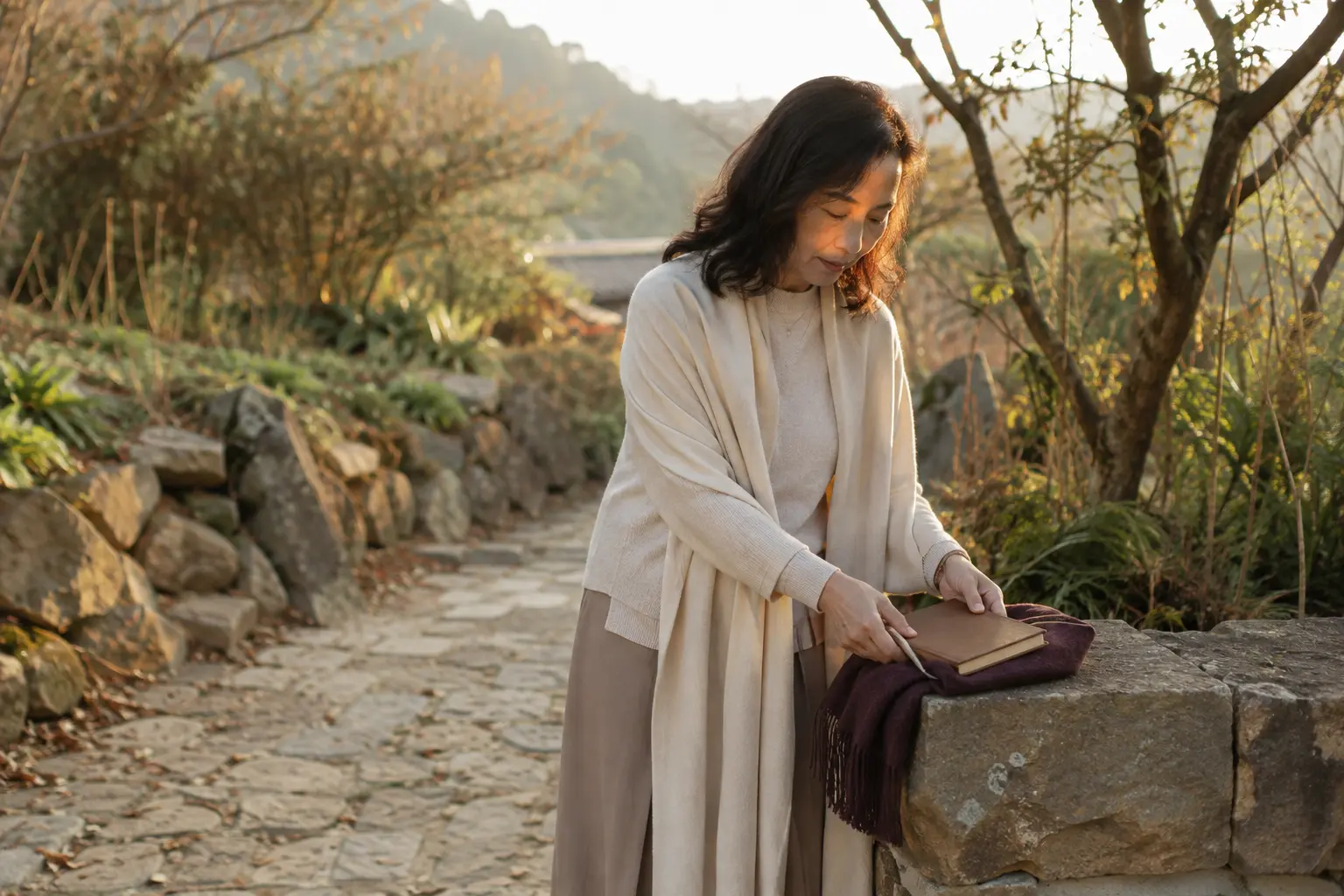
There are seasons when a woman can stand in the middle of the life she built and feel as though everyone made it there except her.
The house may be familiar. The work may still be getting done. The people she loves may still know where to find her when something is needed.
And yet, in one quiet moment—perhaps after everyone has gone to bed, after the call ends, after she closes the laptop—she hears a question she has been too busy to answer:
Where did I go?
It can be frightening to feel lost inside a life you recognize.
You may look at photographs of yourself from another time and search her face for evidence. You may remember what you used to enjoy, what you once imagined, or how easily you could answer a question about what you wanted. You may wonder whether that woman disappeared or whether you simply became too far away from her to hear her clearly.
I know something about becoming difficult to find.
For years, I knew how to become the woman a room could receive. I could read what was needed and adjust. I could be strong, agreeable, composed, useful, or quiet. I once described myself as a chameleon because I had become so practiced at changing around other people that adaptation began to feel like identity.
From the outside, it looked like I knew who I was.
Inside, I was no longer sure which parts of me were true and which parts had learned how to survive.
If you have been asking how to find yourself again, I want to begin with this:
You may not be gone.
You may be underneath everything you learned to become.
Losing Yourself Rarely Happens All at Once
Most women do not decide to leave themselves.
It happens through small agreements made over time.
You learn that one version of you keeps the peace. You discover which needs are welcomed and which ones make the room uncomfortable. You become dependable because dependability protects what matters. You anticipate disappointment and adjust before anyone has to ask.
Perhaps you became the Strong One because falling apart did not feel available.
Perhaps you became the Caretaker because someone truly needed you.
Perhaps you became the Good Woman because goodness felt connected to belonging.
Perhaps you became the Achiever because accomplishment created safety, recognition, or worth.
None of those identities began as a failure. They may have helped you endure, provide, protect, or belong.
But a role can become so successful that it keeps working long after you have stopped asking whether it still fits.
That is how a woman can become unfamiliar to herself without ever appearing lost to anyone else.
She keeps showing up. She keeps carrying. She keeps answering to the name everyone knows.
She simply stops hearing the woman underneath it.
The Woman You Were Is Not the Only Place to Look
When we say, “I want to find myself again,” we often look backward.
We remember the woman before the marriage, before motherhood, before grief, before the career, before disappointment, before life asked so much of her. We imagine she was freer, clearer, or more alive.
Sometimes there is something beautiful to recover from her.
But you are not meant to become untouched by your life.
What happened mattered. Love changed you. Loss changed you. Responsibility changed you. The choices you made and the choices made around you left something behind.
Remembering is not pretending none of it happened.
It is refusing to confuse what affected you with the whole truth of who you are.
You do not have to destroy the woman you became in order to find the woman you are becoming.
The question is not only, “Who was I before?”
It is also:
Who am I now that I am allowed to answer honestly?
Notice Where You Stopped Consulting Yourself
You may not need a dramatic new life to begin finding yourself.
You may need to notice the places where your own voice stopped entering the decision.
When someone asks what you want, do you answer—or immediately calculate what will be easiest for everyone else?
When something hurts, do you acknowledge the hurt—or begin explaining why the other person did it?
When you are tired, do you treat that as information—or as a weakness to overcome?
When a preference rises, do you let yourself hear it before deciding whether it is practical?
These are small questions, but they reveal something important.
The relationship you have with yourself is built in the moment before you disappear.
It is built when you pause long enough to ask, “What is true for me?”
You do not have to obey every feeling. You do not have to turn every preference into a decision. You do not have to stop loving, giving, or considering the people whose lives are connected to yours.
The first step is simpler.
Let yourself be present in the conversation.
Separate Your Roles From Your Identity
One of the hardest questions I faced was who I was beyond the roles that had organized my life.
Wife. Mother. Professional. Caregiver. Problem-solver. The woman who could be counted on.
Those roles were real. Some were deeply loved. Some carried meaning I would never want to erase.
But a role can tell you what you do without telling you who you are.
Try completing this sentence without naming a responsibility:
I am a woman who…
Perhaps the words do not come quickly.
Stay with the silence.
What moves you when no one is watching?
What do you value even when it earns no praise?
What kind of beauty makes you pause?
What are you curious about now—not ten years ago, not before life changed, but now?
What have you stopped admitting because it no longer matches the woman people expect you to be?
The silence after those questions is not emptiness.
It may be the first room you have given yourself in a long time.
Let One Honest Choice Become Evidence
You do not find yourself only by thinking about yourself.
You find yourself through participation.
Choose one small thing without first building an audience around the choice.
Select the meal because you want it. Take the walk because your body wants air. Decline something without inventing a more impressive reason. Return to music, color, movement, reading, prayer, rest, or solitude because something in you becomes more present there.
The choice does not need to change your life.
It needs to tell your inner life: I heard you.
At first, this may feel unfamiliar. You may feel selfish, indecisive, or exposed. That discomfort does not necessarily mean the choice is wrong. It may mean you are no longer using everyone else’s comfort as the only evidence that you are safe.
Self-connection grows when your own voice learns that it will not be asked to speak and then ignored.
The Emergent Soul Woman Is Not Broken
The Emergent Soul Woman is often the woman whose life works because she learned how to adapt.
She may be deeply capable. She may love well. She may have survived what once felt impossible and kept moving because movement was the only option she could see.
Her exhaustion is not proof that she failed.
Her disconnection is not proof that there is nothing left to find.
She is beginning to recognize the difference between who she is and who she learned to be in order to make it through.
That recognition can bring grief.
You may mourn the years you spent performing strength. You may feel anger at how rarely anyone asked what the strong woman needed. You may feel tenderness for the part of you that became so skilled at disappearing.
Let all of that belong.
The goal is not to punish the woman who adapted.
It is to thank her for carrying you—and to let her know she does not have to make every decision that comes next.
The Remembered Woman Knows the Way Back
The Remembered Woman is not impossible to lose.
Life will still become loud. Love will still ask things of her. Old patterns may still return when she is tired, afraid, or uncertain.
What changes is that she recognizes her own absence sooner.
She notices when she is editing herself to remain acceptable. She hears the automatic yes forming and gives herself time. She can love without abandoning herself. She can belong without disappearing. She can trust what she knows even when she is still deciding what to do with it.
She does not become someone new.
She becomes someone who knows there is a way back.
A Remembering Pause™
Give yourself a quiet moment with these questions:
Where in my life do I feel most like myself? Where do I notice myself becoming smaller, quieter, or easier to receive? Which role has become so powerful that I sometimes confuse it with my identity? What part of me has been asking for more room? What is one honest choice I can make this week that includes me?
You do not have to answer everything today.
Begin with the question that makes something inside you exhale.
Then listen without rushing to correct the woman who answers.
Remember who you are.